


 Loading...
The human foot is a complex mechanical structure containing 26 bones, 33 joints, and more than 100 muscles, tendons, and ligaments. In podiatry, the branch of medicine focused on the study, diagnosis, and treatment of disorders of the foot, ankle, and lower extremity, the terminology used to describe structural alignment and vascular health shapes the entire medical or surgical course of care. An experienced interpreter understands these distinctions and communicates them accurately, supporting clear understanding for both the patient and the physician to help ensure timely, appropriate treatment decisions.
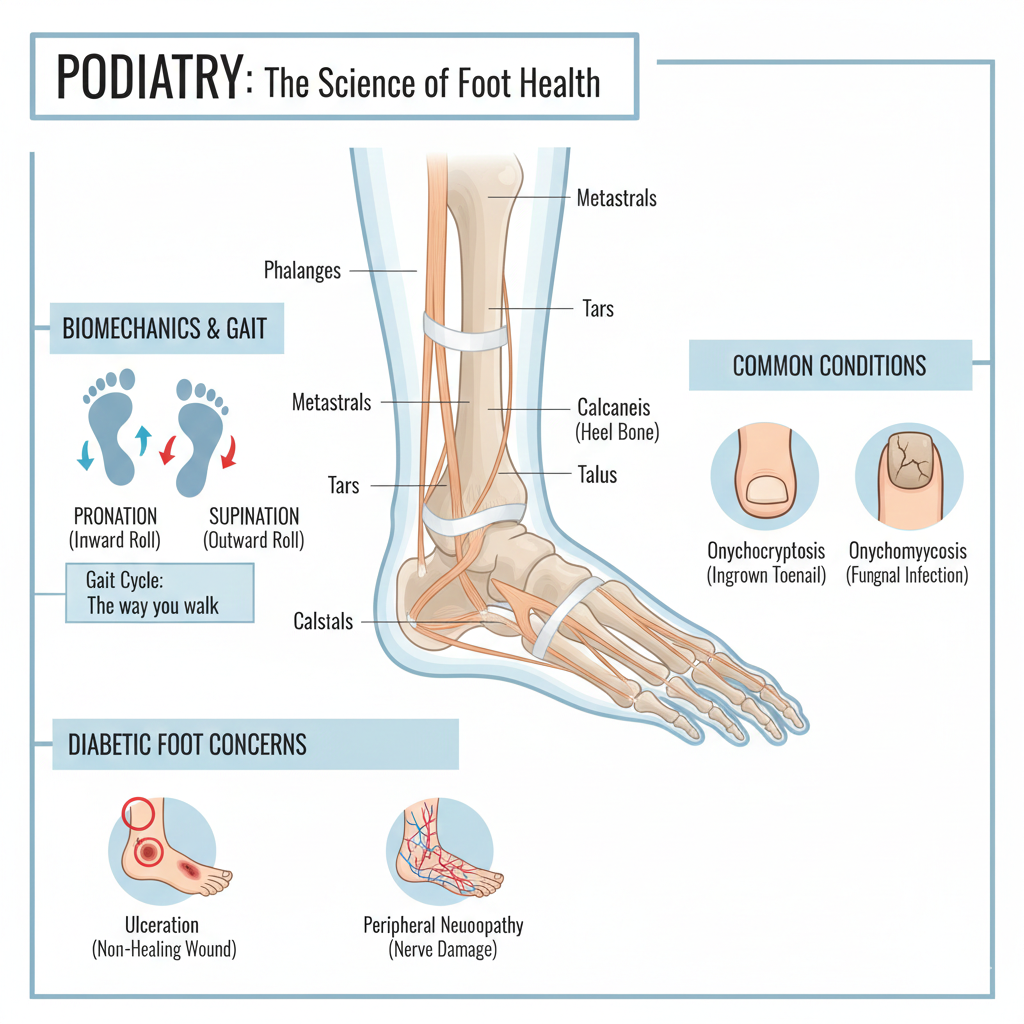
Patients often describe symptoms of the lower extremities using non-medical, experiential language. When interpreters render these descriptions into clinically relevant terminology, they must do so carefully and accurately, ensuring that the patient’s meaning is preserved without adding, omitting, or altering clinical content.
- Peripheral Neuropathy: A patient may say, “My feet feel like they are burning or tingling, and sometimes they go completely numb.” An interpreter should accurately report this as the patient experiencing paresthesia and numbness, allowing the physician to determine if these are signs of nerve damage.
- Plantar Fasciitis: A patient might report, “It feels like a stabbing pain in my heel when I take my first steps in the morning.” An interpreter can convey this exact description, helping the clinician evaluate if the inflammation involves the thick band of tissue running across the bottom of the foot.
- Why this matters: General terms such as “foot pain” may refer to a range of sensations with different clinical implications. Accurately conveying the patient’s exact description allows the clinician to determine whether the symptom is consistent with a mechanical issue, such as a stress fracture, or a systemic issue, such as peripheral artery disease (PAD).
Distinguishing Between Similar Foot Conditions
Podiatry contains terms that sound similar or involve specific structural classifications that have very different meanings. Dropping a prefix or misinterpreting an abbreviation can change the understanding of whether a condition is a minor alignment issue or a serious infection.
- Hallux Valgus vs. Hallux Rigidus:
- Hallux Valgus: Commonly known as a bunion, this is a structural deformity of the joint at the base of the big toe.
- Hallux Rigidus: A form of degenerative arthritis that causes pain and stiffness in the big toe joint, often without the bony bump associated with a bunion.
- Onychomycosis vs. Onychocryptosis: Although both involve the nails, they require different treatments. Onychomycosis refers to a fungal infection of the nail, while Onychocryptosis is the medical term for an ingrown toenail.
- Interpreter considerations: When clinicians discuss conditions such as a callus versus a plantar wart, the interpreter must ensure the information is conveyed fully and accurately, without additions or substitutions, as the underlying causes (friction vs. viral infection) are distinct.
Podiatric evaluation focuses on the function of the lower extremity as a whole rather than isolated bones. Clinicians assess how weight is distributed and how the foot functions during the gait cycle (the process of walking).
- Pronation vs. Supination: Pronation refers to the natural inward roll of the foot as the arch flattens, while Supination is the outward roll of the foot. Misinterpreting these terms can lead to incorrect orthotic recommendations.
- Charcot Foot: A serious condition, often associated with diabetes, where the bones in the foot weaken and can break or shift out of place.
- Ulceration: If a patient is told they have a “non-healing wound,” an interpreter must convey this exactly as stated, without implying a cause, so the physician can discuss the risk of infection or the need for vascular intervention.
Providing only a partial summary or “the gist” of a foot exam can risk miscommunication. By accurately conveying distinctions such as cellulitis (a deep skin infection) versus dermatitis (surface skin irritation), interpreters ensure patients receive the full information needed to understand their condition, while leaving clinical judgment to the physician. Precision is critical in podiatric care.


Leave Your Comments Below