
 (5 votes, average: 4.20 out of 5)
 Loading...
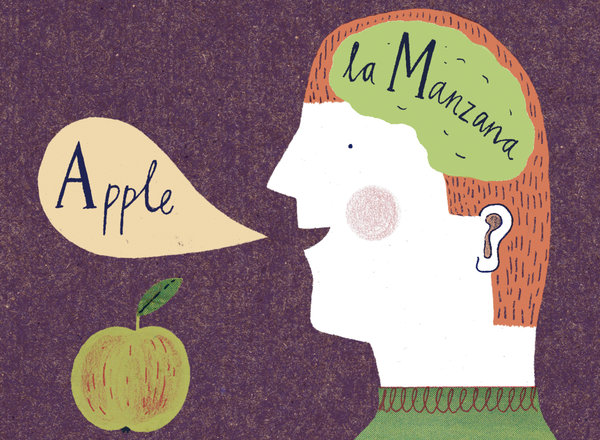 Fact: As of 2012, among the 7 billion people in the world, roughly half of them are considered to be at least bilingual.
Fact: Based on the 2010 data, the United States Bureau of Labor Statistics also project 58,400 translation and interpretation jobs available to translators and interpreters.
Question: How many professional translators and interpreters are out there to take the translation and interpretation jobs? Is being bilingual or multilingual enough to warrant a successful translation and interpretation project?
The story below is brought to you by Ringo Li, a conference interpretation student at the Monterey Institute of International Studies.
I would like to share some insights based on my personal experience. I grew up speaking Mandarin and started learning English since elementary school. Later, I attended high school and college in the United States. I am a proficient bilingual, which opens up many doors for me. Yet, I can tell you that I am far from a qualified translator or interpreter.
Becoming a professional translator and interpreter often requires years of education and training. Experience is also a key element. Moreover, the language specialists’ expertise in specific fields such as medicine, business, technology, law or international relations can also increase success. These are some useful criteria for seeking quality language services. After all, quality work is what matters the most — a highly skilled translator or interpreter can always explain things clearly and accurately in another language.
Today’s world is filled with an overflow of information. When it comes to language services, there are numerous choices — but there are only a few reputable, quality providers. For best results, always look beyond mere bilingualism and multilingualism!
Monterey Language Services strives to provide the highest quality of translation and interpretation services. Please feel free to contact us for more information.
Picture source: http://3.bp.blogspot.com/-VZDVtyDFUtI/T2bRBkvu8YI/AAAAAAAABY8/wdBYOqxADIY/s1600/18GRAY-articleLarge-v2.jpg



 The network of interpreters and translators connected with
 How do we ensure our children and our children’s children will still have clean air to breath, the beauty of the Great Lakes, and the breathtaking ocean views from our Monterey Peninsula? How does the way we conduct business affect our air quality? Where does wastewater end up? Are we depleting all of our potable water resources? Are companies properly handling hazardous waste? Where will we put our solid waste in 50 years? Are civil engineers properly considering environmental issues in tribal lands? These questions and many more are being studied by professionals in environmental science, chemistry, and environmental justice.
 The idea of being able to pinpoint the origin, migration, and evolution of modern day language has kept scientists fascinated ever since there has been technology which allows them do so. The latest of this research was conducted by New Zealand scientists and suggests that the Indo-European language family is descended from a language that emerged in Turkey up to 9,500 years ago!
 “Top of the mornin to ya!” means a heartfelt “Good morning!” in idiomatic Irish/American. Yet none of the following word for word translations convey the true meaning of the phrase.
 Large international conferences require interpretation in many different languages. It takes a great deal of preparation, equipment and teamwork to make the conferences successful. Can you imagine the complicated logistics involved?
 Only three percent of the books published in the United States are translated works originally written in another language. This is compared to France, where 14 percent of their books sold from a translated source and eight percent in Germany. In these countries, two-thirds of translated books are from English.
 Some of these novels have received the highest honor in their country just to get translated into English, and most rarely make it that far. Danish poet and author Pia Juul said it was “a miracle” when her award-winning novel was published into English because “hardly any Danish authors are.” Because of this “cultural crisis,” there are many books that English-readers miss out on because there is no reliable market for books from another language.