
 (4 votes, average: 4.00 out of 5)
 Loading...
 Triqui (de la baja) is an indigenous language spoken in Oaxacan Mexico. Because the area is increasingly dangerous and violent most native speakers will eventually not only leave the area but also leave the language behind with it.
There are an estimated 40,000 people who are fluent in Triqui worldwide. More than half of them no longer live in Oaxaca and around 10 percent of them live right next door in the Salinas Valley.
Although institutions like Monterey Language Services provide translation services in courts and hospitals, there is still worry that this rare language will not survive. Any attempt to save a language will have to be in large numbers in order to succeed.
Barbara Hollenbach, who works with the Summer Institute of Linguistics, is working on a Triqui-Spanish dictionary with 6,000 entries. She believes this is a step in the right direction but says, “The only way to keep a language alive is oral transmission between generations.”
Source : http://www.montereycountyweekly.com/news/2012/jun/07/speaking-minds/
Note:
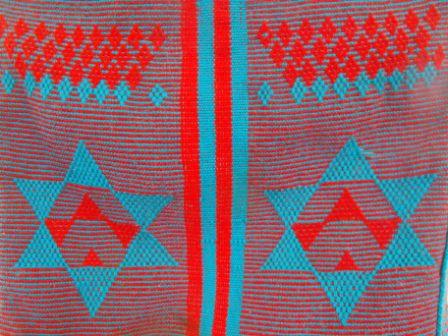
The picture, which shows traditional Triqui weaving patterns, is from one of our colleague’s private collection. The artwork was created by a Triqui artisan group here in our area of Monterey County.
In our community, other languages indigenous to Oaxacan Mexico are spoken, including Mixteco, Zappotec, Chatino, & Nahuatl, etc. These languages need to be preserved as well.

 Today, a hot topic around the world is environmental sustainability. The terms such as sustainable business, ethical business, resilient business, green business, conscious capitalism, collaborative consumption, sustainable brands… etc have been created to keep up with the new ways the business world explains their environmental endeavors. But exactly what do these terms mean?
 he future of English is unclear, however, that won’t stop us from taking some educated guesses about what it could turn out to be.
 Part of what has caused English to evolve so much is its spread around the world. The language’s diversity is shown by the existence of colloquial phrases such as the Jamaican “I and I” (meaning “we”), and “fixin’ to” (implying “planning to” or “about to”) in the southeastern United States. In fact, certain letters and words have ended up with different pronunciations. An example is the word “advertisement”: in England, the stress goes on the second syllable, but in the United States, it goes on the third syllable. Also, when a word in English ends in an R sound, the R sound is replaced with a mid-central vowel sound (represented by the symbol ə) in much of the eastern United States, as well as in England and several former British colonies.
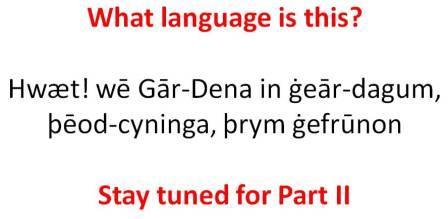 The language English initially started to develop during the fifth century. Since its initial development, there have been four different variations of the English Language: Old English, Middle English, Early Modern English and Late Modern English.
 It is estimated that 25 languages become extinct every year. Every major country has signs that are posted in their countries natural language, as well as English. In this era of globalization, has culture become the main casualty?