


 Loading...
There are some concepts that are easily overlooked in medical interpretation, and one of the most challenging areas for language professionals is Cardiology, specifically conditions like Atrial Fibrillation (AFib).
Atrial Fibrillation is more than just an “irregular heartbeat.” It is a complex electrical malfunction of the heart that requires a specific vocabulary to treat safely.
When a doctor discusses AFib, they use precise descriptors that dictate the entire treatment plan:
- Paroxysmal vs. Permanent: Does the heart fix itself, or is the condition constant?
- Anticoagulation: Is the patient on a “blood thinner,” and if so, is it a Vitamin K Antagonist or a DOAC?
- Ablation: Is the surgeon “removing” something, or are they “cauterizing” tissue to redirect electrical signals?
If an interpreter uses a generic term for these specific medical processes, the patient might consent to a procedure they don’t fully understand, or a doctor might miss a critical symptom.
A trained medical interpreter does more than just swap words; they act as a bridge for specialized knowledge. Here is how they handle complex conditions like AFib:

- In many languages, medical terms sound similar but have different meanings. For example, in some languages, a word that sounds like “constipated” actually means “having a cold.”
- A patient might say, “My heart feels like a bag of worms.” The interpreter must accurately relay that vivid, subjective description to the doctor so the physician can translate it into the objective clinical finding of palpitations.
- During a procedure like a Transesophageal Echocardiogram (TEE), the terminology is dense.
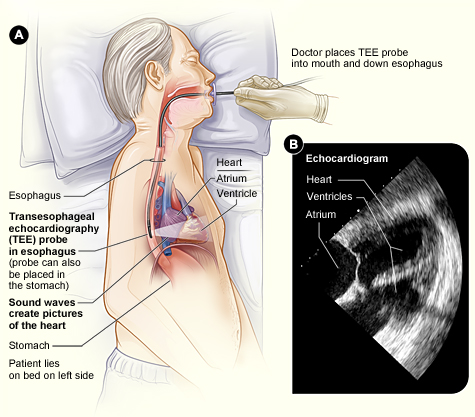
The interpreter must explain the difference between a probe going down the esophagus versus a standard ultrasound on the chest. Miscommunicating this can lead to patient trauma or a refusal of a necessary diagnostic test.
The same applies for the practice of ophthalmology where precise terminology in eye care is a prerequisite for safety.

- Location Matters: In conditions like Choroidal Neovascularization (CNV), knowing exactly where abnormal vessels are growing—either under or through protective layers of the eye—determines how hard they are to treat.
- Scanning Terms: The term “Occult” simply means boundaries are “not easily visible” on a scan. Mistranslating it as “mysterious” can cause a patient unnecessary alarm.
- Medication Nuance: Anti-VEGF injections stop harmful vessel growth. If an interpreter forgets the “Anti” part, a patient might wrongly think they are getting a “growth factor” to help their eye grow.
- Visual Symptoms: Interpreters must distinguish between seeing “wavy lines” (Metamorphopsia) and seeing a “blind spot” (Scotoma). This helps doctors know if there is active fluid leakage or permanent scarring15.
The Professional Difference
A trained medical interpreter acts as a bridge for specialized knowledge. They must understand anatomy and pharmacology to ensure patients receive the exact information needed to protect their health. In medicine, every syllable counts.
Medical interpretation is a specialized skill set. It’s important for interpreters to not just speak two languages, but understand the anatomy, the pharmacology, and the legal requirements of the medical field.
When lives are on the line, the terminology must be exact. Because in medicine, the right word isn’t just a preference—it’s a prerequisite for safety.

Leave Your Comments Below